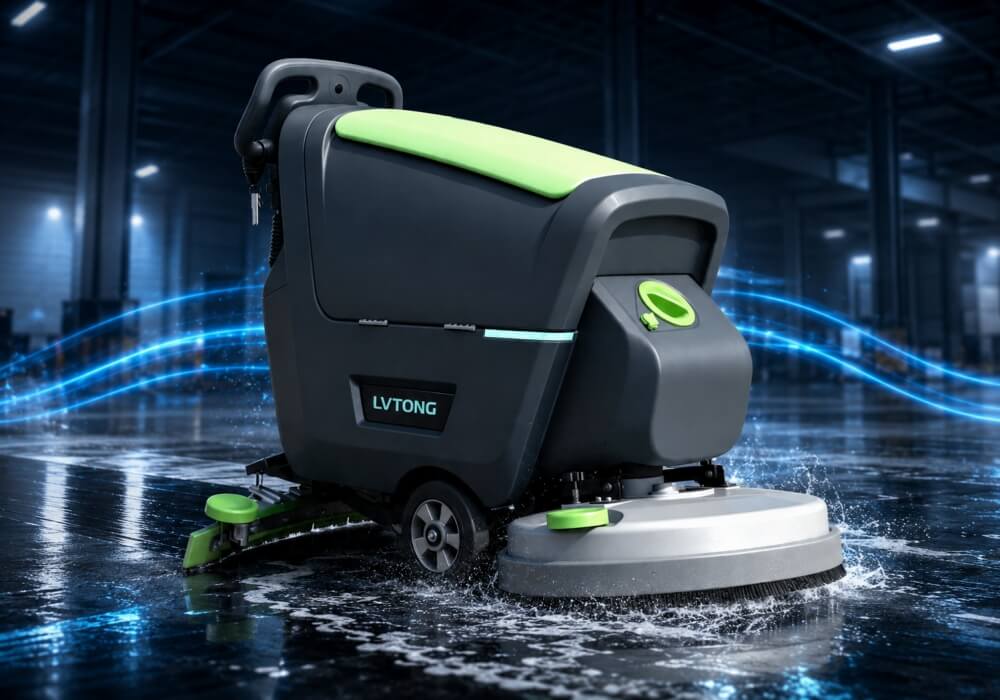
LT-S530X is designed for larger commercial cleaning tasks with a 530 mm-class cleaning path, extended operating capability, and stronger area coverage, while Q5 focuses on compact movement and easier handling in restricted spaces. For facilities cleaning more than 3,000–5,000 m² per day, LT-S530X can reduce cleaning passes by approximately 15–25% compared with smaller units. Q5 remains suitable for offices, restaurants, and retail areas where space flexibility is more important than maximum coverage.
Compact walk-behind scrubbers are widely used in commercial buildings because they combine brushing, water dispensing, and vacuum drying in one process. In 2024, commercial cleaning equipment reports showed that walk-behind models continued to represent a major share of professional floor care equipment due to their lower purchase cost compared with ride-on machines and their ability to operate in narrow indoor areas. Among different compact floor scrubbers, LT-S530X and Q5 represent two different approaches: one prioritizes productivity, while the other emphasizes flexibility.
“A machine’s daily output depends on cleaning width, tank capacity, battery duration, and operator movement speed rather than one specification alone.”
LT-S530X is built for facilities that require regular cleaning across medium-sized floor areas. Its wider cleaning path allows operators to cover more surface in each pass, which is useful in supermarkets, warehouses, schools, and public buildings. A 530 mm cleaning width can cover approximately 20% more floor area per pass than many 430–450 mm compact models under similar operating conditions. When a facility requires several hours of cleaning every day, this difference can reduce repeated movement and improve working efficiency.
Q5 follows a different design direction by maintaining a smaller body size and easier steering characteristics. Small retail stores, clinics, cafés, and office spaces often contain furniture, shelves, and narrow passages where turning radius becomes more important than maximum cleaning speed. In areas below 1,000–2,000 m², a compact machine may complete daily cleaning more efficiently because operators spend less time adjusting position around obstacles.
The difference between the two models becomes clearer when comparing cleaning coverage and workplace conditions.
| Category | LT-S530X | Q5 |
|---|---|---|
| Main application | Medium commercial areas | Small indoor spaces |
| Cleaning approach | Higher area coverage | Flexible operation |
| Suitable floor size | Approximately 3,000 m² and above | Approximately below 2,000 m² |
| Working environment | Open floors, long corridors | Narrow rooms, crowded layouts |
| Operator preference | Productivity focused | Maneuverability focused |
Cleaning width directly affects the number of passes required during daily operation. A wider brush system allows more square meters to be cleaned within the same period, especially in open environments.
For example, a facility with a 5,000 m² floor area may require hundreds of cleaning passes every week. Increasing coverage efficiency by only 10–15% can reduce several hours of operator time each month. LT-S530X is better suited for these conditions because its larger cleaning structure matches the needs of continuous floor maintenance.
Q5 provides advantages when floor layouts are irregular. A restaurant dining area, for example, may include tables, corners, and narrow walkways that require frequent direction changes. A smaller scrubber can move between these areas with less repositioning time. In 2023 commercial cleaning surveys, operators reported that maneuverability was one of the most considered factors when selecting equipment for spaces below 1,500 m².
Water capacity affects how long a scrubber can operate before stopping for refilling or wastewater handling. Larger tanks generally support longer cleaning cycles, especially in facilities where the same operator completes multiple areas during one shift.
LT-S530X is designed around longer cleaning sessions. A larger water system helps reduce interruptions during operation, making it suitable for buildings where cleaning schedules are concentrated into morning or evening periods. For a 4-hour cleaning shift, reducing refill frequency by even 2–3 stops can improve daily workflow.
Q5 uses a smaller structure, which provides easier storage and transportation. This design is practical for businesses where cleaning tasks are divided into shorter periods throughout the day. A small office may only require 30–60 minutes of cleaning, making a compact tank system sufficient.
Battery performance also changes how these machines fit into different workplaces. A professional facility usually needs stable operation for several hours, while smaller businesses often prefer quick deployment and easy storage.
| Usage condition | More suitable option |
|---|---|
| Daily cleaning above 4 hours | LT-S530X |
| Multiple short cleaning periods | Q5 |
| Large open floor areas | LT-S530X |
| Small rooms with many objects | Q5 |
Noise level is another consideration for indoor cleaning. Hospitals, schools, hotels, and offices often require equipment that can operate without disturbing normal activities.
Both LT-S530X and Q5 are designed for indoor environments, but their applications differ. Q5’s compact structure makes it easier to operate in occupied spaces where employees or customers are nearby. LT-S530X provides stronger cleaning capability while maintaining suitability for commercial buildings that require scheduled maintenance.
Floor type and contamination level also influence the choice. Smooth surfaces such as vinyl, tile, and polished concrete are common applications for compact scrubbers. Areas with heavier dust, frequent foot traffic, or larger open spaces usually require stronger brushing performance and higher productivity.
LT-S530X performs well in locations such as warehouses, transportation facilities, and shopping centers where floor cleaning must cover large areas consistently. Q5 is more appropriate for environments where cleaning frequency is high but the total area remains limited.
Maintenance requirements should also be considered before purchasing equipment. Commercial users typically evaluate brush replacement frequency, battery service requirements, recovery tank cleaning, and spare part availability.
A machine used 5 days per week may complete more than 250 operating days annually. Over a three-year period, small differences in maintenance time can influence total operating expenses. LT-S530X is more suitable for users who need frequent professional operation, while Q5 fits organizations looking for easier daily management.
“The best scrubber is not always the largest model; it is the model that matches the floor area, cleaning schedule, and available storage space.”
The selection between LT-S530X and Q5 depends on actual working conditions. Facilities with large open spaces, longer cleaning schedules, and higher productivity requirements will generally benefit from LT-S530X. Its wider coverage, larger operating capability, and commercial design support continuous floor maintenance.
Q5 provides a practical solution for smaller locations where flexibility matters more than maximum coverage. Its compact dimensions make it easier to store, transport, and operate around obstacles.
For commercial users comparing these two compact scrubbers, the decision can be based on three measurable factors: daily cleaning area, average operating hours, and floor layout. A site cleaning over 3,000 m² with long straight paths is better matched with LT-S530X, while a location under 2,000 m² with narrow spaces may achieve better results with Q5.