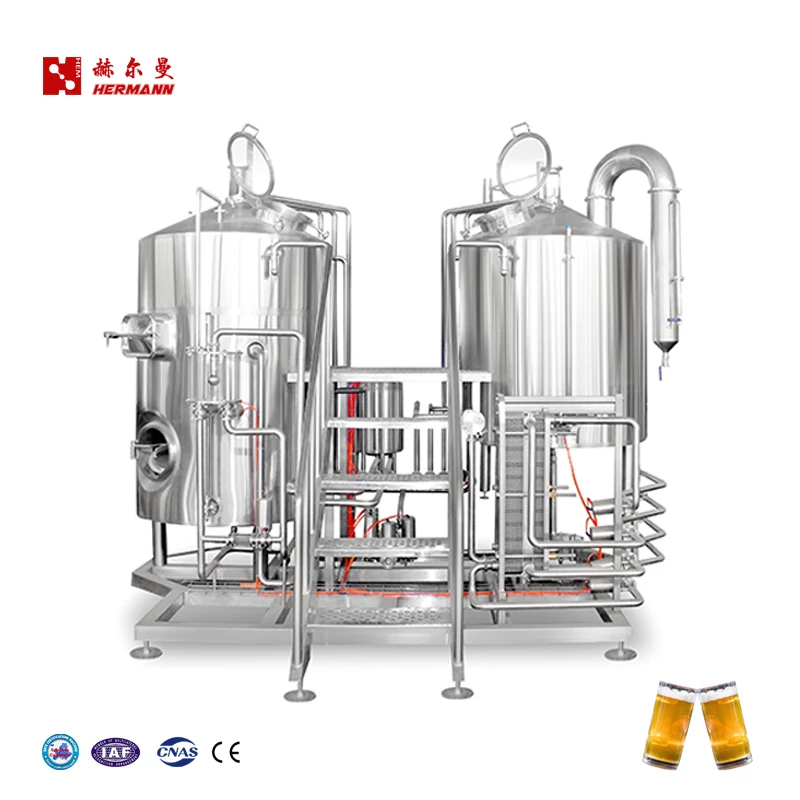
A professional brewhouse is worth upgrading when the existing system limits batch consistency, daily turns, labor efficiency, water use, or future cellar capacity. Brewers Association benchmarking has recorded best-performing figures as low as 3.31 barrels of water per barrel of packaged beer, 6.7 kWh of electricity per barrel, and 0.84 therm of natural gas per barrel in its 2015 data. Those numbers are not universal targets, but they show the operating range possible in well-managed breweries. For a brewery producing 10,000 bbl a year, even a 10% improvement in brewhouse throughput, material use, or utility consumption compounds across hundreds of batches.
Production capacity should be measured by complete brew-cycle time, not vessel nameplate volume. A 15-bbl system completing two turns produces 30 bbl of wort in a brewing day; the same nominal batch size completing three turns reaches 45 bbl, a 50% increase in daily wort output before fermentation capacity is considered. Mash heating, lautering, kettle filling, boiling, whirlpool residence, knockout, and cleaning all contribute to that cycle.
That is where vessel configuration starts to matter. A compact two-vessel system may combine mash and lauter functions in one vessel and kettle and whirlpool functions in another. A three- or four-vessel layout separates more process stages, allowing one batch to move forward while another begins. The benefit depends on recipe, heating rate, staffing, grain bill, and cleaning procedure rather than vessel count alone.
A brewery running 250 production days per year illustrates the scale. Moving from 30 to 45 bbl of wort per day raises theoretical annual brewhouse output from 7,500 to 11,250 bbl before losses, scheduling gaps, or cellar restrictions. The extra 3,750 bbl per year only matters when fermenters, bright tanks, cooling, packaging, and utilities can accept it, so brewhouse sizing should be checked against the complete production line.
A larger brewhouse can still produce poor throughput when the lauter tun, heating system, pumps, heat exchanger, or CIP sequence becomes the slowest stage.
Mash and lautering performance deserve equal attention because small percentage changes repeat on every brew. A 2013 Canadian pilot brewing comparison published through MBAA reported brewhouse yields of 71.0%, 71.6%, and 73.0% across three malt samples, with lautering times of 41, 42, and 47 minutes. The data came from specific pilot trials rather than a universal brewery benchmark, but it shows how raw material and process conditions affect both extract recovery and time.
Professional systems give brewers more control over those conditions through accurate temperature sensing, controlled agitation, suitable false-bottom geometry, adjustable rake speed, and variable-speed pumping. If a brewery processes 1,000 metric tons of malt annually, a one-percentage-point change in extract recovery can become commercially noticeable, although the actual beer output depends on malt specification, recipe gravity, trub loss, and fermentation performance.
Temperature control also affects repeatability. A mash program may include several rests, and a brewer needs the same measured conditions whether the recipe is produced on Monday morning or during a second shift on Friday. Modern controls can store vessel temperatures, pump states, timing, and recipe steps, reducing dependence on an operator remembering every manual adjustment.
Automation should still be matched to production volume. A brewery producing 1,000 bbl per year may gain little from installing controls designed for a 100,000-bbl plant. At higher utilization, however, automating repeated valve sequences, temperature ramps, transfers, and CIP stages can reduce hands-on time over 200 or more brewing days per year while providing process records for troubleshooting.
| Operating point | What to measure | Example comparison |
|---|---|---|
| Brewhouse turns | Wort batches per production day | 2 vs. 3 turns = 50% more nominal daily wort |
| Extract performance | Extract recovered from grist | Track percentage by recipe and malt lot |
| Knockout | Minutes from whirlpool to fermenter | Compare actual time across 20–30 brews |
| Cleaning | Water, chemical, and minutes per CIP | Record each cycle for 4 weeks |
| Utilities | kWh, therms, and water per bbl | Compare monthly rolling figures |
Utility use becomes more important as annual output rises. Brewers Association data reported a wide spread among participating breweries; its 2015 update listed observed electricity figures ranging from 6.7 to 709 kWh/bbl and water ratios from 3.31 to 81.7 bbl of water per bbl of packaged beer. Facility size, restaurant operations, process layout, measurement boundaries, and production efficiency all influence those figures, so direct comparison requires similar brewery types.
Water deserves separate measurement because brewing water is only part of total consumption. Vessel rinsing, floor cleaning, packaging, keg washing, cooling, and CIP can use substantial volumes. Brewers Association guidance notes that facilities without an effective conservation program can use more than 10 gallons of water for each gallon of beer produced. Metering individual processes helps separate brewing demand from avoidable cleaning or utility use.
The scale of water exposure is documented beyond individual plants. A Brewers Association water-risk assessment evaluated 122 breweries, with World Resources Institute Aqueduct data available for 120 of them, or more than 98% of the sample. Location affects supply risk, but equipment affects how much water a brewery needs to purchase, heat, treat, and send to wastewater systems.
CIP design connects water use with production time. Proper spray coverage, drainable pipework, sanitary fittings, suitable flow velocity, chemical concentration control, and return monitoring can make cleaning more repeatable. A 20-minute reduction across two cleaning cycles per brewing day saves 40 minutes; over 200 production days, that equals about 133 operating hours that can be reassigned to production or maintenance.
Cleaning performance should be verified by defined time, temperature, chemical concentration, mechanical coverage, and sanitation procedures rather than by extending every rinse.
Thermal efficiency is another area where equipment design changes operating cost. The U.S. Department of Energy estimates that 20% to 50% of industrial energy input can be lost as waste heat through exhaust gases, cooling water, equipment surfaces, and heated products. Breweries create recoverable heat during wort cooling, hot-water generation, boiler operation, and other thermal processes.
A plate heat exchanger can transfer heat from hot wort to brewing water while cooling wort toward fermentation temperature. The recovered hot water can then support the next mash, sparge, or cleaning cycle when storage capacity and production timing allow. The exact recovery rate depends on inlet temperatures, flow rates, exchanger area, fouling, and water requirements, so breweries should ask suppliers for actual design calculations rather than a generic efficiency claim.
Kettle heating deserves the same level of scrutiny. Compare steam pressure or electric heating capacity, heating surface, expected ramp time, boil-off requirement, insulation, condensate handling, and controls. Saving 10 minutes on a stage performed three times a day removes 30 minutes from the daily schedule; across 250 brewing days, that represents 125 hours of brewhouse availability before maintenance or recipe differences are considered.
Equipment selection therefore needs more than tank volume and purchase price. When comparing craft beer equipment, review vessel working volume, total volume, stainless grade, surface finish, weld treatment, pump curves, motor ratings, valve type, instrumentation, heat-exchanger sizing, automation architecture, utility requirements, and spare-parts availability.
A quotation should also state what is excluded. Platforms, piping, steam generation, glycol systems, water treatment, compressed air, electrical installation, controls integration, freight, commissioning, and operator training can sit outside the base equipment price. If a quoted 30-bbl brewhouse needs another 15% to 25% of project spending for utilities and site integration, comparing only the vessel package can distort the capital plan.
Maintenance access has a measurable production effect as well. Pumps, mechanical seals, sensors, valves, manways, motors, heat exchangers, and spray devices need inspection or replacement during years of use. A component that takes four hours to access rather than one hour can add three hours to each service event; repeated 6 times per year, that is 18 hours of extra downtime.
Material and sanitary construction also affect service life and cleaning. Breweries commonly specify stainless steel for product-contact surfaces because it tolerates normal brewing temperatures and suitable cleaning chemistry when correctly fabricated and maintained. Buyers should request documented material specifications, weld finishing standards, piping drawings, electrical schematics, recommended spare parts, and warranty terms before fabrication begins.
The cellar must be sized alongside the brewhouse. A 20-bbl brewhouse making three turns can send 60 bbl of wort toward fermentation in one production day. If the brewery only has one empty 40-bbl fermenter, the additional brewhouse capacity cannot be used. A planned 25% increase in annual sales volume may require fermenter, bright-tank, glycol, packaging, and cold-storage additions at the same time.
Floor space and utilities need the same forward view. Adding another vessel later may require larger steam piping, a higher-capacity boiler, additional electrical service, stronger glycol refrigeration, larger drains, or more hot-liquor storage. Planning those connections during a 2026 installation is usually easier than opening floors or replacing undersized utility headers after production has expanded.
Finally, commissioning should test real recipes rather than confirm only that pumps and valves operate. Record mash heat-up time, temperature stability, lautering duration, extract recovery, kettle ramp, evaporation, whirlpool performance, knockout time, cooling-water use, CIP duration, and utility consumption over the first 20 to 30 production batches. That dataset gives the brewery a practical operating baseline for future maintenance, recipe adjustments, staff training, and capacity planning.